Street Dog NGO Near Me: How to Find the Right Street Dogs Rescue Foundation
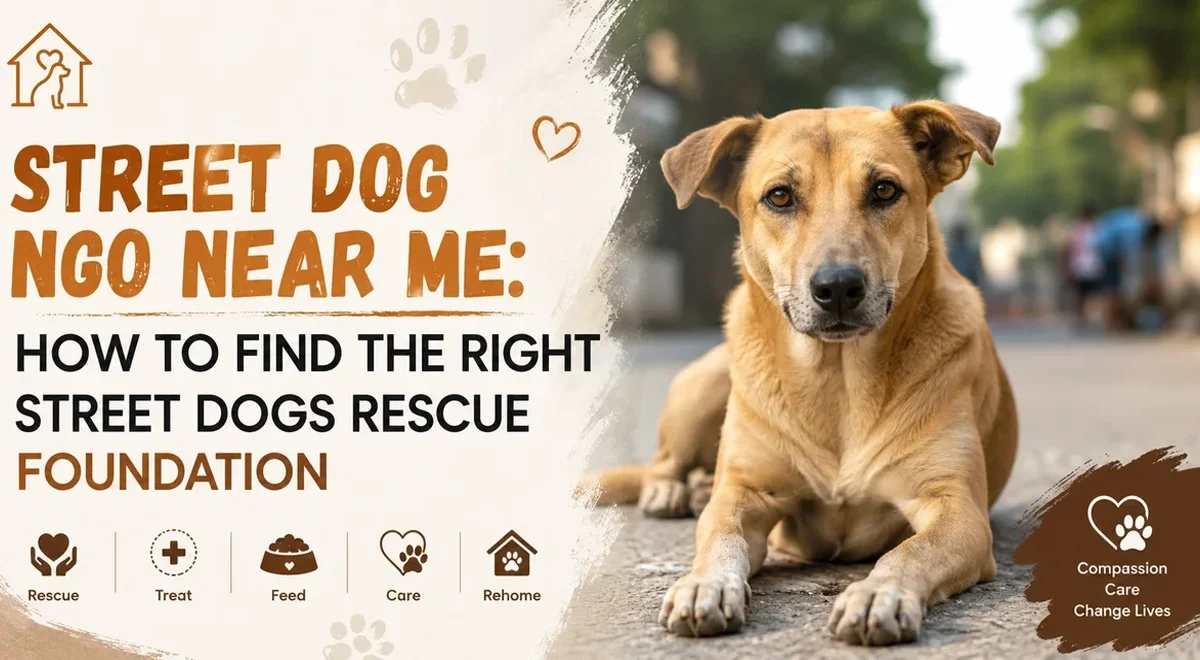
Finding a reliable street dog NGO near me can be the first step toward saving an injured, abandoned, sick, or vulnerable street dog. But choosing the right organisation requires more than a quick online search.
Finding a reliable street dog NGO near me can be the first step toward saving an injured, abandoned, sick, or vulnerable street dog. But choosing the right organisation requires more than a quick online search. A responsible animal welfare organisation should have access to veterinary care, follow humane rescue practices, support vaccination and sterilisation, and maintain transparency about donations and animal rehabilitation. This guide explains how to find genuine help, what to do when you encounter a dog in distress, how Animal Birth Control (ABC) programmes work in India, and how individuals can contribute to long-term street dog welfare.
Why Is It Important to Find a Reliable Street Dog NGO?
Street dogs are exposed to traffic accidents, injuries, infectious diseases, extreme weather, starvation, abuse, and conflicts with people or other animals. A dog that appears helpless may need urgent veterinary attention rather than simply food or temporary shelter.
When searching for a street dog NGO near me, look for organisations that can respond appropriately to different situations, including emergency rescue, veterinary treatment, vaccination, sterilisation, rehabilitation, adoption, and community awareness.
A responsible NGO should prioritise the animal's welfare rather than treating rescue as simply removing dogs from public spaces. In India, the Animal Birth Control Rules, 2023 provide a framework for sterilisation and immunisation programmes for stray dogs, with implementation involving local bodies and authorised agencies.
What Services Should a Street Dog NGO Provide?
Before contacting a street dog NGO near me, understand the services you may need. A credible animal welfare organisation may provide or coordinate:
- Emergency rescue for injured dogs
- Veterinary examination and treatment
- Anti-rabies vaccination
- Sterilisation and post-operative care
- Treatment for infections, wounds and fractures
- Temporary shelter or recovery support
- Food and nutritional assistance
- Adoption and rehabilitation
- Community education about responsible animal care
- Support for animals affected by accidents or extreme weather
Not every organisation provides every service. Some NGOs specialise in rescue and medical treatment, while others focus primarily on ABC programmes, adoption, shelter management, or feeding initiatives.
How Do You Choose the Right NGO?
Searching online for a street dog NGO near me can produce numerous results, but proximity should not be your only consideration.
1. Check Its Animal Welfare Work
Look for evidence of real rescue, treatment, vaccination, sterilisation, rehabilitation, or adoption work. Recent photographs, case updates and clearly explained programmes can help you understand how actively the organisation operates.
2. Verify Veterinary Support
For an injured dog, veterinary assistance is critical. Ask whether the NGO has an in-house veterinary facility, works with qualified veterinarians, or can arrange emergency treatment.
3. Ask About Rescue Procedures
A professional rescue should be humane and appropriately managed. Injured or frightened dogs can react unpredictably, so trained rescuers should assess the situation before attempting capture.
4. Check Transparency
If you intend to donate, examine whether the organisation explains how donations support animals. Information about programmes, expenses, rescue work and outcomes can help donors make informed decisions.
5. Look for Long-Term Solutions
Effective street dog welfare is not limited to feeding. Vaccination and sterilisation are important components of humane population management. AWBI states that its ABC and immunisation scheme is intended to control stray dog populations through sterilisation and reduce rabies through immunisation.
What Should You Do If You Find an Injured Street Dog?
If you come across an injured dog, first assess the surroundings and your own safety. Do not rush toward an animal that is frightened, aggressive, unconscious, or in severe pain.
If possible:
- Move yourself away from traffic or immediate danger.
- Observe the dog from a safe distance.
- Take a clear photograph or video to help rescuers identify the location and condition.
- Contact a nearby animal rescue organisation or veterinary service.
- Give the rescuer accurate location details.
- Avoid forcing food or water on a severely injured or unconscious animal.
- Follow professional instructions before attempting transportation.
If the dog has bitten or scratched someone, medical attention should be sought immediately. WHO states that rabies is preventable through prompt post-exposure care, and people exposed to a potentially rabid animal should seek post-exposure prophylaxis without delay.
Why Are Vaccination and Sterilisation So Important?
Street dog welfare also has an important public-health dimension. Rabies is a vaccine-preventable disease, and WHO reports that dogs are responsible for up to 99% of human rabies transmissions. Sustained dog vaccination, combined with appropriate dog population management and bite prevention, is a key part of rabies control.
Sterilisation can help reduce uncontrolled breeding over time, while vaccination helps protect dogs and communities against preventable disease. India's Animal Birth Control Rules, 2023 specifically establish a regulatory framework for sterilisation and immunisation of stray dogs.
Therefore, when evaluating a street dog NGO near me, ask whether the organisation supports scientifically and humanely managed vaccination and sterilisation programmes rather than relying only on short-term interventions.
Can You Help Street Dogs Without Adopting One?
Absolutely. You do not have to adopt a dog to make a meaningful contribution.
You can:
- Provide clean drinking water during hot weather.
- Offer appropriate food responsibly.
- Sponsor veterinary treatment.
- Support vaccination and sterilisation.
- Volunteer with rescue or awareness programmes.
- Help spread adoption appeals.
- Report injured animals to credible rescue organisations.
- Donate essential medical or shelter supplies.
- Encourage neighbours to treat community dogs humanely.
The most effective support combines compassion with responsible action. Feeding alone cannot address injuries, disease, reproduction, or emergency medical needs.
How Can Communities Make Street Dogs Safer?
The search for a street dog NGO near me should ideally be the beginning rather than the end of community action.
Residents can work together with animal welfare organisations and local authorities to identify injured animals, support vaccination and sterilisation initiatives, maintain responsible feeding practices, and promote humane treatment.
Community cooperation is particularly important because street dogs live within human environments. Responsible waste management can reduce access to harmful garbage, while awareness can reduce unnecessary conflict between people and animals.
The Animal Welfare Board of India has also issued advisories concerning humane care and implementation of animal welfare and ABC measures, reinforcing the importance of coordinated and lawful approaches to street animal management.
Why Consider Animal Hope Foundation?
If you are looking for a street dog NGO near me, Animal Hope Foundation can be considered as an organisation to connect with for animal welfare support. Supporting an animal welfare organisation can help extend the reach of rescue, treatment, rehabilitation, and other welfare initiatives.
Even a small contribution can become meaningful when it supports veterinary treatment, medicines, food, recovery, vaccination, sterilisation, or rehabilitation. For people who cannot personally rescue animals, donating or volunteering can be a practical way to participate in animal welfare.
Before donating, however, always review the organisation's current programmes, contact information and donation process so that your support reaches the intended animal welfare work.
Frequently Asked Questions
1. How can I find a street dog NGO near me?
Search for local animal welfare organisations, rescue groups, veterinary NGOs and shelters in your area. Check their current contact details, rescue services, reviews, recent activities and veterinary support before requesting assistance.
2. What should I do if I find an injured street dog?
Keep yourself safe, avoid frightening or unnecessarily handling the dog, record the location and condition, and contact a reliable animal rescue organisation or veterinarian. If the animal is near traffic, explain the immediate danger clearly when requesting help.
3. Can NGOs sterilise and vaccinate street dogs?
Yes. Sterilisation and immunisation are central components of India's regulated Animal Birth Control framework. The Animal Birth Control Rules, 2023 provide for programmes involving sterilisation and immunisation of stray dogs through responsible local authorities and authorised implementing agencies.
4. Is feeding street dogs enough to protect them?
No. Feeding can provide nutritional support, but long-term welfare also requires access to veterinary treatment, vaccination, sterilisation, injury care, safe environments and responsible community management.
5. What should I look for before donating to an animal NGO?
Check the organisation's identity, animal welfare activities, transparency, donation process, veterinary or rescue work, recent updates and evidence of impact. Choose organisations that clearly explain how contributions are used and prioritise humane animal care.
Conclusion
Finding a trustworthy street dog NGO near me can make a life-changing difference when a vulnerable animal needs help. Whether the situation involves an accident, illness, starvation, vaccination, sterilisation, rehabilitation or adoption, timely and responsible intervention can prevent suffering.
Street dog welfare is ultimately a shared responsibility. Individuals, NGOs, veterinarians, communities and local authorities all have a role to play. If you encounter an animal in distress, seek professional assistance instead of attempting a risky rescue yourself.
And if you are searching for a street dog NGO near me because you want to do more than simply help one animal, consider supporting organisations such as Animal Hope Foundation through responsible volunteering or donations. Your contribution can help turn compassion into practical care—and give a street dog a safer chance at life.
Help Us Save More Animal Lives
Share this article with fellow animal lovers to spread empathy!